Structural flea and tick populations in Riverside County thrive primarily along the interfaces where irrigated residential landscapes meet hot, dry native scrub. Properties in Arlington Heights, Victoria, and along the…
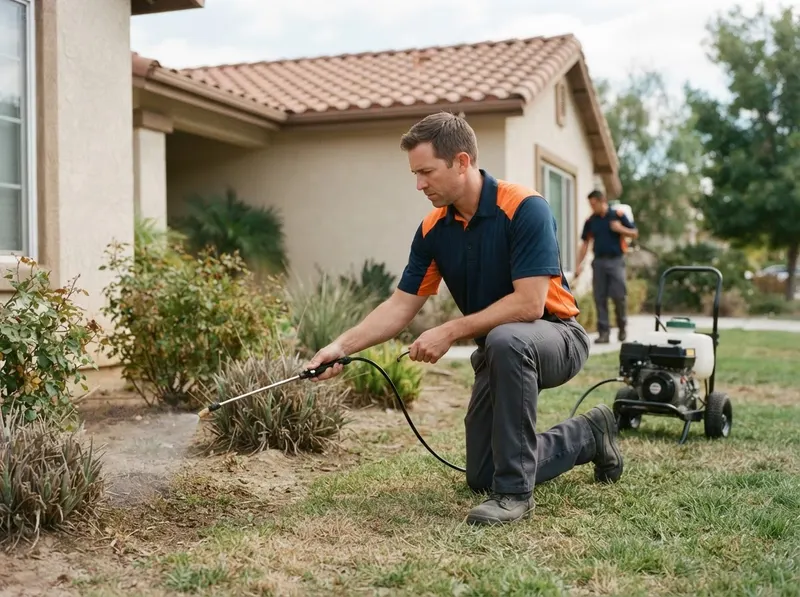
Structural flea and tick populations in Riverside County thrive primarily along the interfaces where irrigated residential landscapes meet hot, dry native scrub. Properties in Arlington Heights, Victoria, and along the arroyos of Hawarden Hills face persistent re-infestations driven by urban wildlife hosts such as opossums, raccoons, and feral cats. The treatment combines a fast-acting synthetic pyrethroid adulticide with an EPA-registered insect growth regulator (IGR) like pyriproxyfen. This dual-action chemical approach arrests chitin development in flea larvae and prevents adult tick reproduction. The Centers for Disease Control and Prevention documents how ticks wait on the tips of tall grasses and low shrubs to cling to passing hosts, a biological behavior known as questing. Standard topical sprays fail if they do not penetrate the soil thatch layer where flea pupae remain protected inside impervious silk cocoons for up to 12 months.
Remediation protocols target the top 2 to 3 inches of organic soil, decomposed granite pathways, brick patios, and crawlspace moisture lines common to older 1920s craftsman residences in the Wood Streets and Downtown Riverside. Technicians operate under standards established by the National Pest Management Association and licensing guidelines from the California Structural Pest Control Board. A mechanical power sprayer applies a targeted microencapsulated residual barrier reaching 3 feet up the exterior masonry foundation and 5 feet outward across adjacent turf, planters, and hardscapes. This barrier halts the biological transition of fleas from dog runs and shaded dirt staging areas directly into structural crawlspaces or interior floorboards.
Decision-fit considerations determine whether a property requires standalone yard treatment or a combined interior protocol. If biting adults are detected only outside on turf, pavers, or exterior walls, exterior-only yard remediation is sufficient. However, if domestic pets have introduced gravid females indoors, lingering cocoons within carpets and baseboards require companion indoor IGR applications. Unlike broad-spectrum lawn services that coat unshaded, sun-baked grass where UV light degrades active ingredients within 48 hours, as noted in pesticide behavior research from the California Department of Pesticide Regulation, this protocol applies treatments strictly to shaded harborage zones. Priority zones include perimeter block fences, dog houses, detached garage foundations, and beneath patio decking. Homeowners can review wildlife vector containment resources through the California Department of Fish and Wildlife to address secondary tick transport caused by deer and rodents along Sycamore Canyon Wilderness Park and Canyon Crest.
Environmental management forms the final layer of defense. Proper moisture management, outlined in plant health bulletins from the UC Statewide IPM Program, prevents the excessive soil dampness that shields immature flea larvae from natural desiccation. Technicians assess fence perimeters in Orangecrest, Casa Blanca, and La Sierra to identify host animal entryways, advising structural exclusion or physical hardware mesh installation to prevent carrier wildlife from re-seeding tick populations. For public health data regarding regional vector-borne illnesses, reference bulletins issued by the California Department of Public Health and safety guidelines published by the Occupational Safety and Health Administration regarding safe reentry periods after perimeter applications. Once the liquid application dries completely over 60 to 90 minutes, treated zones remain resilient against heat degradation, locking in continuous structural security.
Every job gets a firm, written price after a free on-site visit.
For standards, safe disposal, and service guidance on pest control services in Riverside, CA, useful references include U.S. EPA, ENERGY STAR, U.S. Dept. of Energy, Consumer.gov, U.S. Census Bureau, and Google Maps. General consumer and small-business resources are available from USA.gov, Better Business Bureau, FTC Consumer Advice, U.S. Small Business Administration, and Ready.gov.
Tell us about your structural flea & tick yard remediation job in Riverside and we'll send a clear, written quote, usually the same day.
 Nationwide Pest Defense